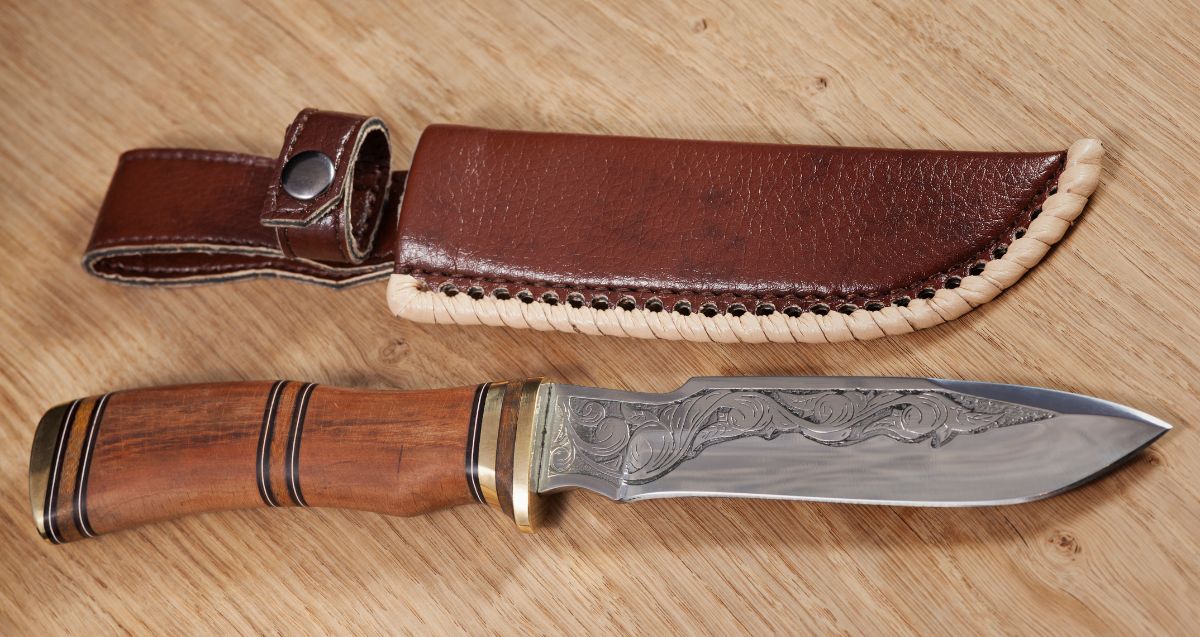
A custom sheath does more than just protect your knife blade; it reflects your personal style and craftsmanship. If you’re ready to make a cover that’s both functional and uniquely yours, these four tips will help guide you through the process.
1. Select the Right Material
The material you choose is the foundation of your sheath. Though modern sheaths come in all sorts of durable materials, thermoplastics among them, leather is still the top choice and the most accessible for DIYers. Leather is traditional and durable, valued for its classic look and ability to mold perfectly to your knife over time. When selecting leather, consider its thickness and temper. A vegetable-tanned leather, for example, is firm and ideal for tooling and shaping.
2. Create a Precise Pattern
A successful sheath starts with an accurate pattern. Lay your knife on a piece of paper or cardboard and carefully trace its outline. Additionally, you will want to add a welt, which is a strip of material that runs along the seam where the blade sits. This piece protects the stitching from being cut by the sharp edge.
Your pattern should account for the thickness of your knife and include extra space for stitching or rivets. Taking the time to create a detailed and precise pattern will help you avoid mistakes and material waste later on.
Some creators even add decorative elements, such as their name or a small decal. You can load and use embroidery files to add these intricate patterns to leather.
3. Prioritize Secure Stitching
Your sheath’s stitching holds everything together, so it must be strong. The saddle stitch is a popular and reliable hand-stitching technique for leatherwork because it creates a durable, locking seam. This method involves using two needles on a single thread, passing them through the same hole from opposite directions.
Before you begin stitching, use a groover to create a channel for your stitches to sit in. This protects the thread from abrasion and gives your project a clean, professional finish. Using a waxed thread will also add moisture resistance and help the stitches lock into place.
4. Ensure Proper Fit and Retention
A good sheath holds your knife securely without being too tight. For leather sheaths, you can wet-form the material around the knife to achieve a snug fit. This process involves dampening the leather and molding it to the contours of your knife, then letting it dry completely.
And there you have it—a few tips for making a custom sheath for your knife. If you take your time to do it right, you’ll end up with a gorgeous, practical testament to your craftsmanship.
No products found.