Knives face constant threats, from daily wear to rust that dulls their sharpness and compromises their performance. Over time, these issues make maintenance frustrating and reduce the longevity of the blades you rely on. If you’ve struggled with a favorite knife losing its edge, you know how disappointing this is. However, the solution may be more straightforward than it seems. Here are five reasons to consider coating your knife blades.
Shield Your Blades From Wear
Every time you use a knife, the blade faces wear and tear. Slicing through tough materials, handling rough tasks, or exposure to the elements chip away at an uncoated blade. However, coatings act as a protective shield, strengthening the blade and reducing the damage caused by friction, moisture, and hard use.
For example, a titanium nitride coating increases the hardness of your blade and resists abrasion. Whether you’re cutting through dense rope during an outdoor expedition or using your knife on repetitive daily tasks, a coated blade withstands the pressure and retains its quality for longer.
Achieve Better Performance
Beyond protection, coating your blade improves its performance. Some coatings reduce friction, ensuring smoother, more efficient cuts without catching or dragging. Other coatings improve edge retention, keeping your blade sharper for extended periods.
That said, many tool coatings for better performance exist. So it’s important to find a coating that complements the knife’s function. For example, ceramic coatings excel at reducing friction, suiting precision tasks like slicing or food prep. In comparison, titanium nitride coatings enhance hardness and durability, which suits heavy-duty applications like cutting through tough materials.
Protect Against Corrosion
Even the best steel isn’t immune to rust. High-carbon blades, known for their cutting power, are particularly vulnerable to moisture and salty conditions. Coatings provide a barrier against oxidation, helping your blades withstand exposure to water, humidity, and other environments that promote corrosion.
For example, black oxide coatings create a layer that fights against rust while retaining the blade’s sharp edge. If you often take your knives into wet conditions, such as fishing trips or camping in damp climates, a coating ensures your blade maintains its toughness.
Simplify Maintenance
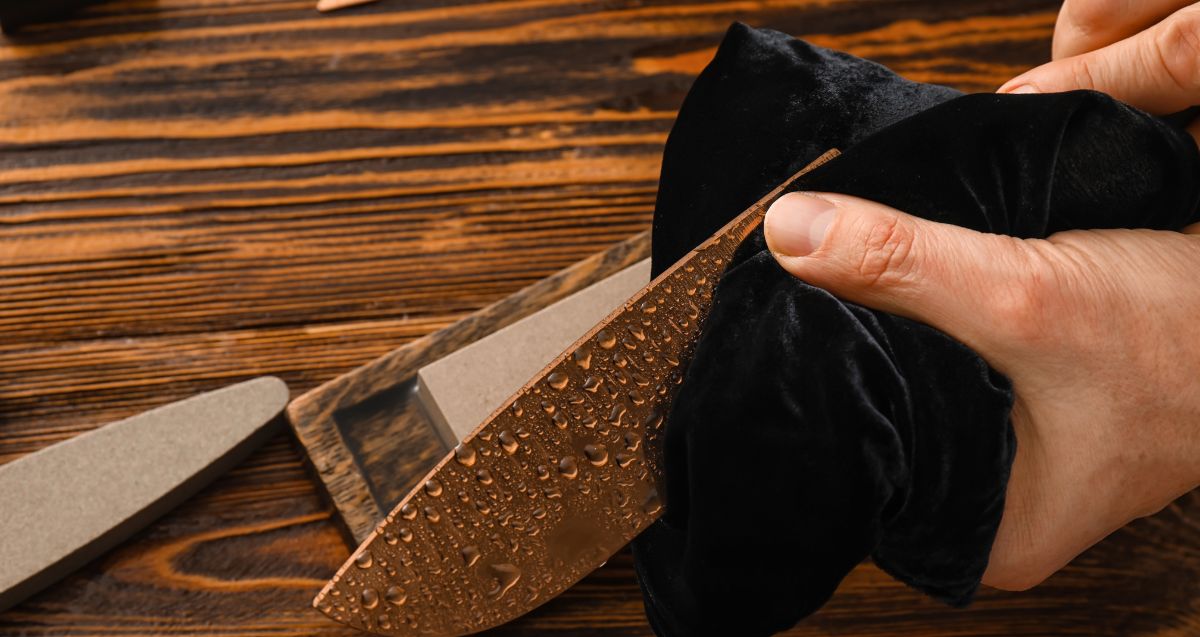
Cleaning an uncoated blade can sometimes test your patience. Dirt, grime, and food particles tend to cling, making maintenance a bigger chore than it needs to be. However, consider coating your knife blades to simplify cleaning and save time.
Fluoropolymer coating, for instance, reduces substance adhesion, such as raw meat juices or sticky residues. Rather than scrubbing endlessly to remove stubborn grime, you can rinse or wipe the blade clean.
Minimize Glare
Bright light reflecting off an uncoated blade can make it harder to work with, especially in outdoor settings or professional kitchens with strong overhead lighting. Coatings with matte or non-reflective finishes reduce glare, ensuring you focus on your task without distraction.
For tactical knives, non-reflective coatings like DLC (diamond-like carbon) or black oxide reduce visibility in hunting scenarios. In professional kitchens, matte coatings help chefs during intricate tasks like filleting fish or finely dicing vegetables.
No products found.