A good camp meal often starts long before the skillet reaches the fire. Someone needs to portion ingredients, prepare vegetables, trim meat, open packaging, and handle dozens of small cutting jobs along the way. A dependable knife makes these tasks considerably easier, but the tool alone cannot compensate for poor technique.
Learning a handful of practical knife skills can make campsite cooking safer, faster, and far less frustrating. Below, we’re going into detail about a handful of knife skills that make campsite cooking much easier.
Choose a Knife That Fits the Cooking Job
Not every outdoor meal requires a large survival knife. If your primary goal involves preparing food, a practical camp kitchen knife or chef-style blade may provide better control than a heavy tool designed for rugged fieldwork. Consider the ingredients you normally bring and the amount of preparation you expect to complete outdoors. A knife should match its main purpose instead of simply looking impressive in your gear.
Blade length also affects control. A compact knife can handle smaller ingredients easily, while a longer blade gives you more working edge for larger vegetables and cuts of meat. Handle shape matters because wet or cold hands can make a poor grip more noticeable. Choose a knife that feels stable and comfortable through the movements you actually use while cooking.
Create a Stable Cutting Surface
Excellent knife technique cannot overcome a cutting board that slides around every time you apply pressure. Set up food preparation on the flattest, most stable surface available rather than balancing a board on your knees or an uneven rock. A camp table makes the job easier, but another solid surface can work when you secure the cutting area properly. Keep unnecessary gear away from your cutting zone so that you have room to move.
A damp towel or nonslip material beneath a cutting board can reduce movement when conditions allow. Check the board periodically because outdoor surfaces may shift as you work. Keep the knife away from the edge when you put it down. Campsites often become crowded during meal preparation, so predictable tool placement protects everyone sharing the space.
Learn the Basic Slice
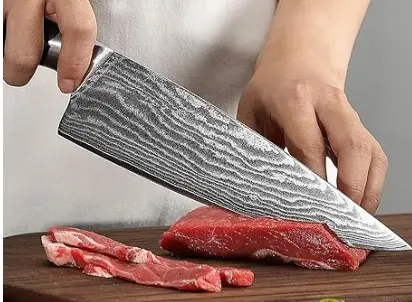
Many camp meals rely on simple slicing. Potatoes, onions, peppers, sausage, fruit, and other common ingredients require little more than a controlled forward or rocking motion. Avoid forcing the blade directly downward when the knife performs better with a smooth slicing movement. Let a sharp edge do the work instead of compensating with excessive pressure.
Pay attention to thickness as you cut. Thin pieces generally cook more quickly than thick ones, which matters when you have limited fuel or cook over a fire with fluctuating heat. Uniform pieces give you more control over timing. This can mean the difference between evenly cooked vegetables and a pan containing burnt edges and nearly raw centers.
Practice Safe Chopping
Chopping becomes useful when preparing larger quantities of vegetables or herbs. Keep the knife under control throughout the motion rather than dramatically lifting the blade high above the board. A smaller, deliberate movement gives you better accuracy and reduces wasted effort. The exact technique will vary according to blade design and the ingredient.
Outdoor cooks should also resist using a food-preparation knife for every campsite task. Cutting rope, striking materials, prying objects, or chopping wood can damage a knife that manufacturers designed primarily for culinary use. Bring appropriate tools for demanding utility work rather than sacrificing your cooking blade. Proper use can preserve the edge and keeps the knife ready for food preparation.
Treat Fire Preparation as a Separate Skill
A knife enthusiast may enjoy tools that can handle food preparation and outdoor utility, but building a cooking fire requires its own knowledge. Learn tips for identifying high-quality firewood before a camping trip so that you understand why dry, appropriate wood generally supports a more manageable fire than damp material. Follow campground rules about gathering or transporting firewood because many destinations restrict what campers may collect or bring. Local rules can also limit the movement of invasive insects and forest pests.
Keep your culinary knife out of heavy firewood processing unless its manufacturer specifically designed it for that purpose. A hatchet, camp axe, or suitable saw handles larger wood much more effectively. Even a sturdy outdoor knife has limits, and using the wrong tool can damage the blade or create a safety problem. Matching each tool to its job makes the entire camp kitchen work more smoothly.
Bring a Focused Camp Kitchen Kit
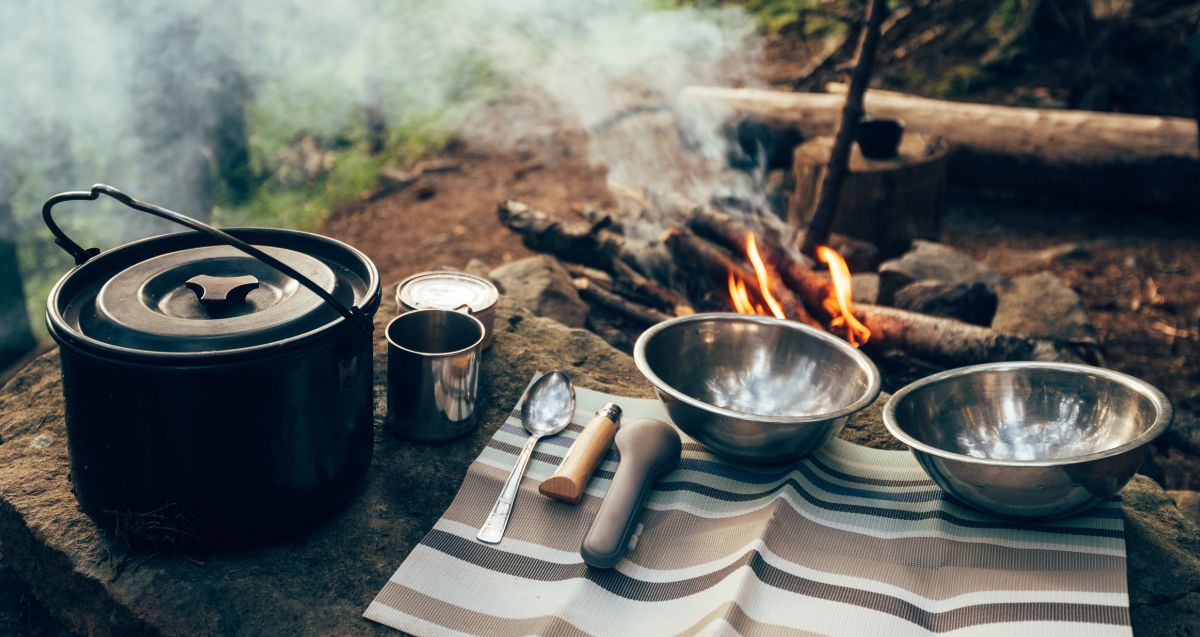
A thoughtful kit reduces the temptation to misuse your knife when another tool would work better. You don’t need to carry an entire home kitchen, but a few carefully selected items can make food preparation easier.
Consider packing the following items:
- A sharp knife suited to your planned meals
- A secure sheath or blade guard
- A stable cutting board
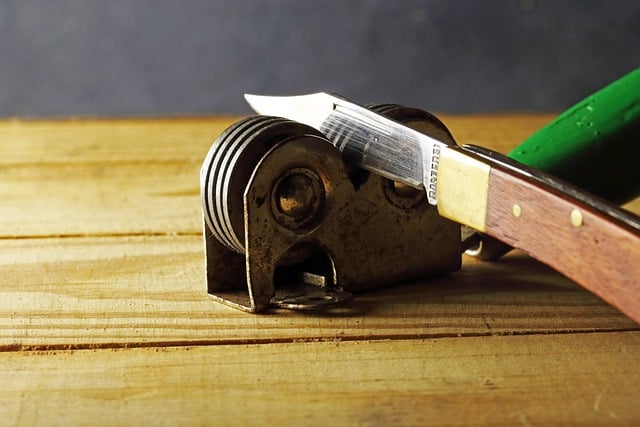
- An appropriate sharpening or honing tool
- Separate equipment for processing larger firewood
Moreover, choose equipment according to your campsite, cooking style, and transportation limits. Someone car camping can reasonably bring more equipment than a backpacker carrying everything for miles.
Keep Your Knife Sharp
A dull knife can make campsite cooking unnecessarily difficult. When an edge struggles to bite into an ingredient, cooks often compensate by applying additional pressure. This extra force can reduce control if the blade suddenly slips. Check your knife before leaving home instead of discovering a neglected edge when dinner preparation begins.
Learn the maintenance method appropriate for your particular knife and steel. Some campers carry a compact sharpening tool for longer trips, while others simply ensure the knife starts the weekend in excellent condition. Avoid experimenting with an unfamiliar sharpening method when you urgently need the blade. Routine maintenance at home makes campsite performance much more predictable.
Better Technique Makes Outdoor Cooking Simpler
Campsite cooking doesn’t require flashy knife skills. It rewards control, preparation, awareness, and a blade suited to the task. Stable cutting surfaces and consistent technique can make simple meals much easier to prepare outdoors. Knowing when another tool should take over also protects the knife you rely on for food.
Practice these skills in your kitchen before taking them into the woods. Familiar movements become especially valuable when daylight fades or your campsite offers fewer conveniences than expected. With a sharp knife and disciplined technique, you can spend less time fighting your ingredients and more time enjoying the meal. This is exactly what a good camp knife should help you accomplish.