While many knives benefit from the use of protective gloves, certain types absolutely demand them due to the nature of their tasks. Today, we’ll discuss which knives need cut-resistant gloves, so that you can prioritize safety and work confidently.
What Are Cut-Resistant Gloves?
Cut-resistant gloves protect your hands from injuries caused by sharp items. Manufacturers craft these gloves from durable materials, such as Kevlar, high-performance polyethylene (HPPE), or metal mesh, to resist cuts, abrasions, and punctures.
These gloves also offer varying levels of protection, tailored to different tasks. Levels range from basic defense against minor nicks to high-level protection for heavy-duty cutting tools. Explore this guide on everything you need to know about cut-resistant glove levels to choose the right gloves for your needs.
1. Oyster Shucking Knives
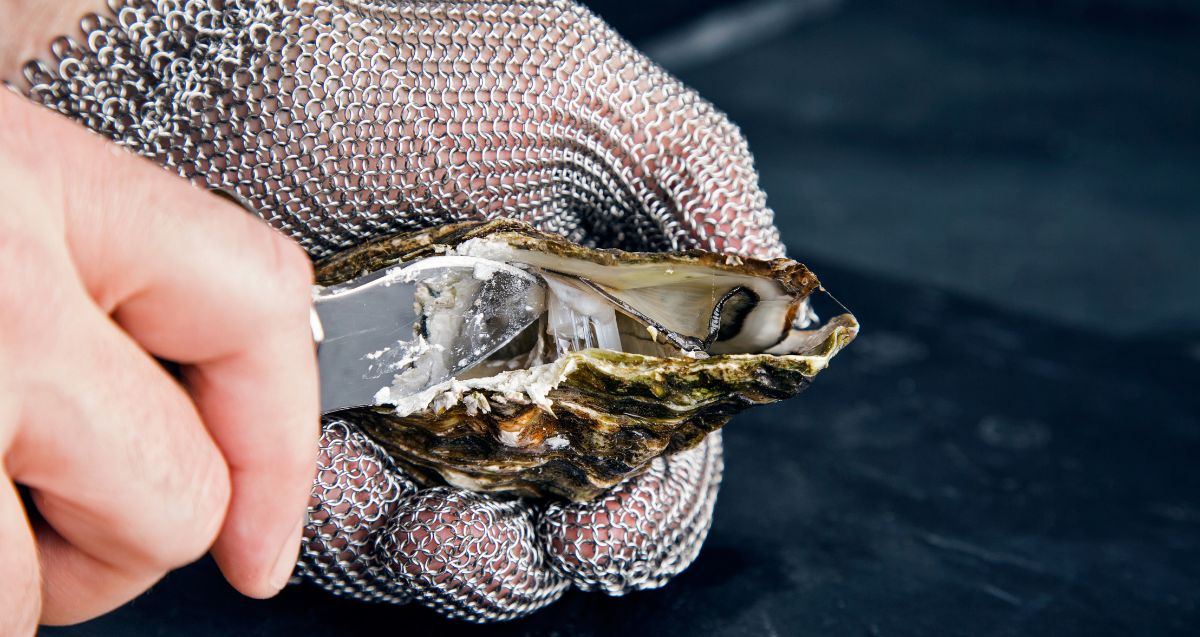
Oyster shucking knives open oyster shells and extract the meat inside. The shucking process requires inserting the blade into tight gaps and twisting to pop the shell. Shucking involves force and can lead to cuts or punctures if the knife slips.
Cut-resistant gloves protect your hands from these risks, shielding against accidental stabs while improving your grip on slippery shells. These gloves keep you safe and in control, whether you’re preparing oysters for a meal or a raw bar!
2. Boning Knives
Boning knives have thin, pointed blades that allow you to separate meat and fish from the bone with precision. Hunters frequently rely on these knives to process game, such as venison or duck, while chefs use them to trim pork tenderloin or fillet fish.
This knife’s thin blade and pointed tip make it efficient, but also hazardous, especially when you’re applying force to maneuver around bones and joints. A small misstep could lead to a severe injury, particularly if the blade slips while working on tougher cuts of meat. Cut-resistant gloves help during these tasks, letting you cut close to the bone without risking your grip.
3. Tactical and Survival Knives
Tactical and survival knives are durable and multi-functional, featuring serrated edges, piercing tips, and thick blades. People commonly use these knives for cutting rope, preparing tinder, or self-defense during outdoor expeditions. However, their rugged design can quickly become a liability if you handle them carelessly.
Tactical and survival knives need cut-resistant gloves because they act as a barrier, protecting hands from both minor scrapes and severe cuts. For example, if your blade hits an unexpected knot in a rope, the sudden resistance could cause it to slip. However, wearing cut-resistant gloves can reduce the risk of cuts and nicks.
4. Carpet Knives
Carpet knives, or linoleum knives, feature hooked blades that cut through tough flooring materials. Trimming bulky carpet edges or slicing vinyl sheets demands precision, which raises the risk of blade-related injuries. The curved blade, while effective, often snags or shifts suddenly during cuts.
Cut-resistant gloves shield your hands from nicks and punctures when the blade catches on dense carpet fibers. The gloves also improve your grip, allowing you to maintain control.
No products found.