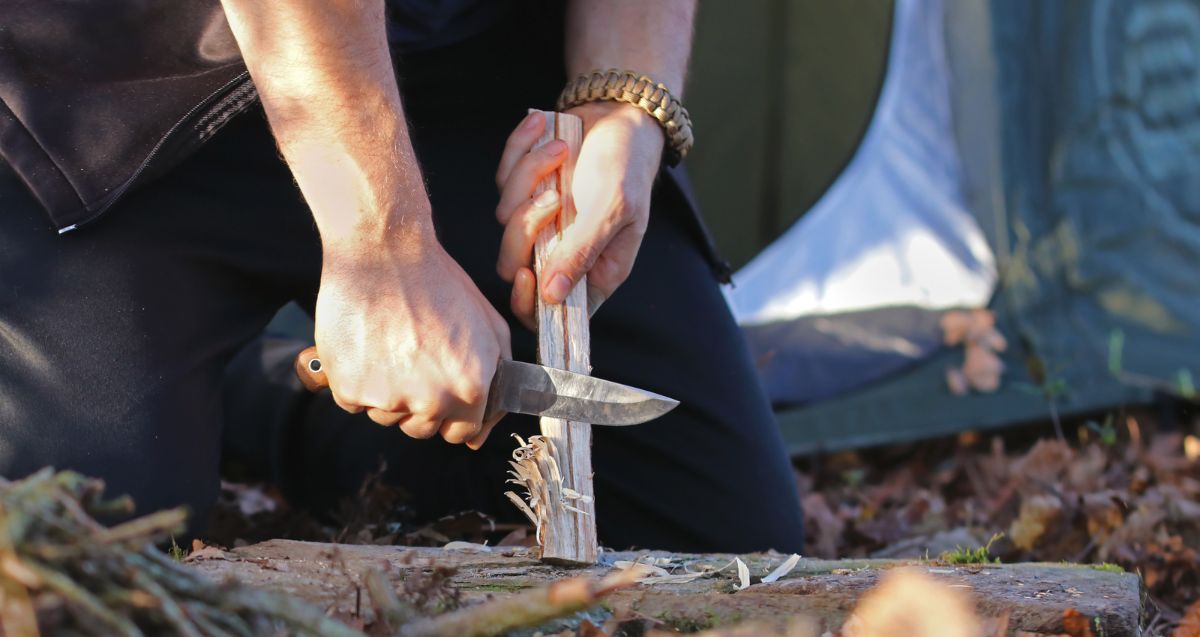
A reliable outdoor knife earns its place because it can handle so many small jobs in the field. From cutting cordage to trimming kindling, it is often the first tool people reach for. Still, some outdoor tasks are simply too rough for a knife, and knowing that helps protect both the blade and the person using it.
Using a knife beyond its limits can damage the tip or make the tool harder to control. Before forcing a blade through a rough job, it is worth asking whether the task calls for a different tool.
Avoiding Pry-Bar Jobs
A knife should not be treated like a pry bar. The tip is made for controlled cutting and piercing, not sideways pressure. When someone uses a knife to lift, twist, or force materials apart, the blade can snap or bend before there is much warning.
Even a sturdy fixed blade has limits. If a task requires leverage, a small pry bar or multitool is usually the safer choice.
Skipping Digging Jobs
Digging with a knife may seem convenient, but it is hard on the edge. Soil and grit can dull steel quickly, while hidden stones can chip the blade or damage the point.
A knife can help with light cutting around roots, but it should not replace a trowel or shovel. Keeping the blade out of the dirt preserves its edge for cleaner, safer cuts later.
Limiting Heavy Chopping
Some outdoor knives can handle light chopping, especially larger fixed blades. That does not mean they should be used like a hatchet. Repeated hard strikes can wear down the edge and strain the handle over time.
This is where many outdoor tasks become too rough for a knife, even if the blade feels strong in the hand. For work that calls for chopping or clearing dense ground cover, purpose-built outdoor tools are safer than forcing one knife to handle every job.
Handling Dirty Materials Carefully
Dirty rope, muddy straps, and debris-covered fabric can wear down an edge faster than clean materials. Grit works against the blade with every cut, leaving it duller and less predictable.
If dirty material has to be cut, clean the knife afterward and check the edge before putting it away. A quick inspection can prevent small problems from becoming bigger ones.
Knowing When To Switch Tools
A good knife is valuable because it is useful, not because it can replace an entire tool kit. Skilled outdoor users know when to use the blade and when to put it away.
Treat a knife as a cutting tool first. When a job calls for leverage, digging, or heavy impact, switching tools protects the blade and makes the work safer.
No products found.