Forge Welding: How Blacksmiths Use It to Create Knives

Have you ever wondered how knives are made? Typically, it’s through one of two processes: forge welding or stock removal. Today, let’s talk about forge welding. This is the technique humans have been using since the iron age to craft everything from kitchen knives to hunting blades. It involves heat and pressure by heating metal until it bonds. If you’re wondering how a blacksmith uses forge welding to create a blade, here’s the step by step.

Heat The Metal to the Right Temperature

To begin a weld, the blacksmith heats the material until the surfaces are ready for the two pieces of metal to fuse together. Typically, these pieces will be made of a ferrous metal over a non-ferrous metal because iron-based alloys handle the heat and pressure needed for knife forging. Common materials include carbon-rich iron alloys and wrought iron.

The pieces sit in the forge until they reach a bright yellow heat. Too cool and the bond fails. Too hot and the material burns. Yep, the fire gets picky fast.

Clean The Surfaces Before Bonding

A clean surface helps the weld hold. When hot metal meets oxygen, scale forms on the outside. That flaky layer blocks contact and leaves weak spots inside the blade blank.

Blacksmiths often use flux during this stage to protect the hot surfaces from oxygen and loosen scale before the pieces join. Borax is common because it melts across the surface and carries scale away from the weld area. Clean contact gives the bond a stronger chance to hold.

Press The Pieces Together with Hammer Strikes

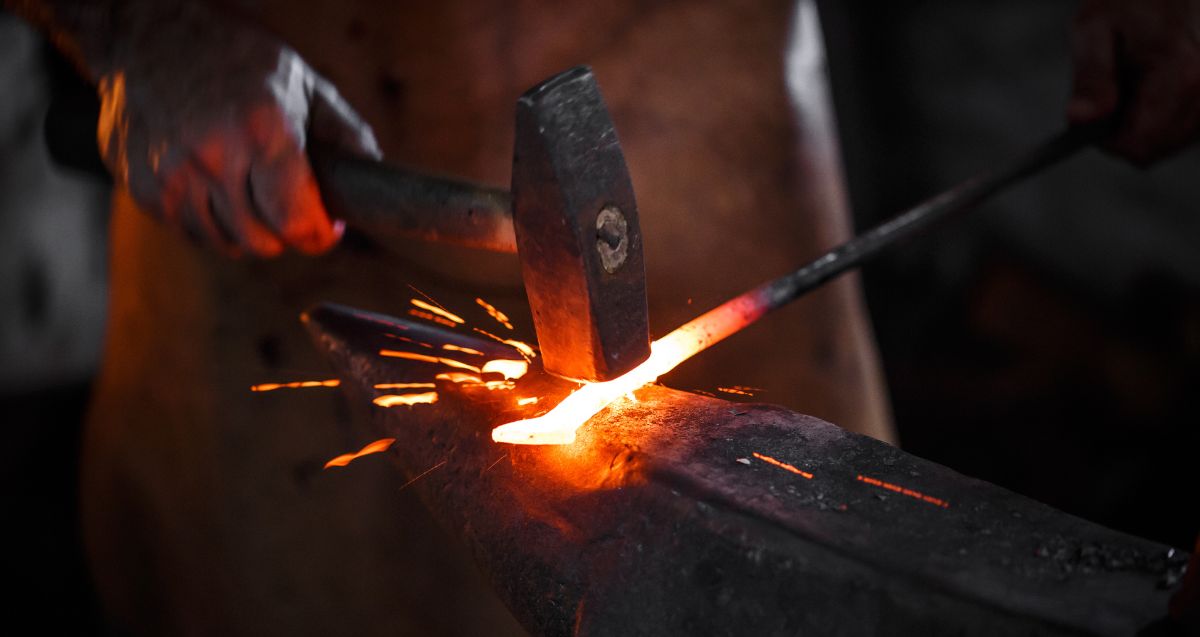
Once the heat looks right, the blacksmith moves fast. The pieces come out of the forge and land on the anvil. The first hammer strikes need control.

Heavy hits can knock the pieces out of line. Steady blows press the hot surfaces together and start the weld. After the bond grabs, the blacksmith can use stronger strikes.

The hammer pressure pushes trapped flux out of the joint and closes tiny gaps between the layers. Once the weld sets, the two heated pieces become one solid blank.

Shape The Welded Blank into a Blade

Next, the blacksmith starts shaping the blank. The blade begins as a thick piece of joined metal. Heat and hammer work stretch it into a useful form.

The smith forms the point first or works the body down toward the edge. The tang also takes shape during this stage. That’s the part that fits into the handle.

Each trip back into the forge gives the blacksmith another chance to refine the form. The blade gets closer with every heat.

Harden The Blade and Finish the Edge

A forged blade still needs heat treatment. The blacksmith heats the blade and quenches it in oil or water. This hardens the metal so the edge can hold up during use.

Hard material can become brittle, so tempering comes next. The blade gets reheated at a lower temperature to reduce stress inside the metal. After that, grinding and polishing clean up the shape.

The edge comes last. That final sharpening turns the forged blank into a working knife.

What The Process Creates

After all this work, the blacksmith is rewarded with a strong, handmade knife. They can then use that knife themselves or sell it to someone who appreciates a blade with real craft behind it. Now that you understand how forge welding works, you can hopefully appreciate the heat, pressure, and patience that went into making every knife in your collection.

Bestseller No. 1
CRAFTSMAN Utility Knife Blades, 100 Pack, for Drywall, Leather, Rubber and More (CMHT11921A)
  • Heavy duty utility blade for general cutting, trimming, and scraping of a variety of materials
  • Precision-honed edge for consistent and long cutting life
  • Fits most standard utility knives
  • 100 pack
Bestseller No. 2
WORKPRO Utility Knife Blades, SK5 Steel, 100-Pack with Dispenser
  • Notice: Be sure to watch our HOW-TO video before using it. It can help you slide the utility blade out quickly and easily
  • Super Versatility: It is made entirely according to standard utility knife blades and fits most standard & fixed utility knives perfectly
  • Affordable: Includes 100-pack replacement blades and they come in a well-built case for safe storage and disposal. Each blade is rigorously tested and we firmly believe this is a great deal
  • Durability: WORKPRO utility knife blades are made from SK5 steel, which is of high quality and durability
  • Sharp: The knife blades are highly sharp and cut through lots of materials easily and without hesitation. Ideal for cutting cardboard, leather, linoleum, rope, soft metal, etc
Bestseller No. 3
JETMORE 100 Pack Utility Knife Blades, SK5 Steel Box Cutter Blades, Standard Utility Blade Refills with Storage Box, Sharp Heavy Duty Razor Knife Blade Replacement for Box Cutter, Drywall
  • SK5 Steel Durability: Made from industrial-grade SK5 high carbon steel, these heavy duty utility blades provide exceptional hardness and edge retention. Compared to standard carbon steel, SK5 offers improved wear resistance and extended life span, ensuring fewer blade changes and higher efficiency during cutting tasks. Whether you're working on renovation projects, packaging, or construction sites, these blades can handle tough materials like carpet, drywall, rubber, and rope with ease
  • Standard Size Fit: This utility knife blades 100 pack is crafted to meet universal blade specifications, ensuring a perfect fit with most retractable utility knives, folding knives, and box cutters. Whether you're replacing utility knife blades for everyday tasks or switching out box cutter blades on the job, these standard-size blades deliver reliable compatibility and performance you can count on across various tools and scenarios
  • Razor Sharp Edge: Our razor blades for utility knife are precision-honed to deliver ultra-sharp, clean cuts every time. Engineered with a refined edge angle, these blades slice effortlessly through thick cardboard, leather, carpet, vinyl, linoleum, soft metals, and more. The sharpness reduces drag, improves control, and minimizes hand fatigue—making it the ideal choice for DIYers, contractors, or warehouse professionals
  • Safe Storage Box: Each set comes with a compact and durable utility blade storage box that protects blades from dust, moisture, and accidental contact. The slide-out design allows safe, one-at-a-time access to blades while keeping unused blades neatly organized. Whether stored in a toolbox, desk drawer, or tool belt, this box keeps your workspace safer and your workflow smoother
  • Trusted by Pros & DIYers: These replacement blades for utility knife are built with Jetmore’s commitment to precision and durability. Whether you're a professional in construction, a warehouse operator, a DIY hobbyist, or simply handling everyday home repairs, Jetmore delivers blades you can trust. We stand behind our quality—so you can cut with confidence, knowing your tools won’t let you down


Explore Categories
improve knife sharpness
Damascus knife steel kitchen set