Your Essential Guide to Japan Knives
Want to know the different types of Japanese knife and how they can improve your kitchen skills? This guide breaks down the essential types of Japanese knives, from versatile all-rounders to specialized tools, making it easier to choose the right knife for your needs.
Key Takeaways
- Japanese knife craftsmanship combines traditional forging techniques with modern advancements, ensuring superior quality and precision for culinary tasks.
- Key types of Japanese knives include the versatile Gyuto, Santoku, Nakiri, and specialized options like the Yanagiba and Sujihiki, each designed for specific culinary functions.
- Proper care, including cleaning, sharpening, and appropriate storage, is essential for maintaining the longevity and performance of Japanese knives.
Understanding Japanese Knife Craftsmanship
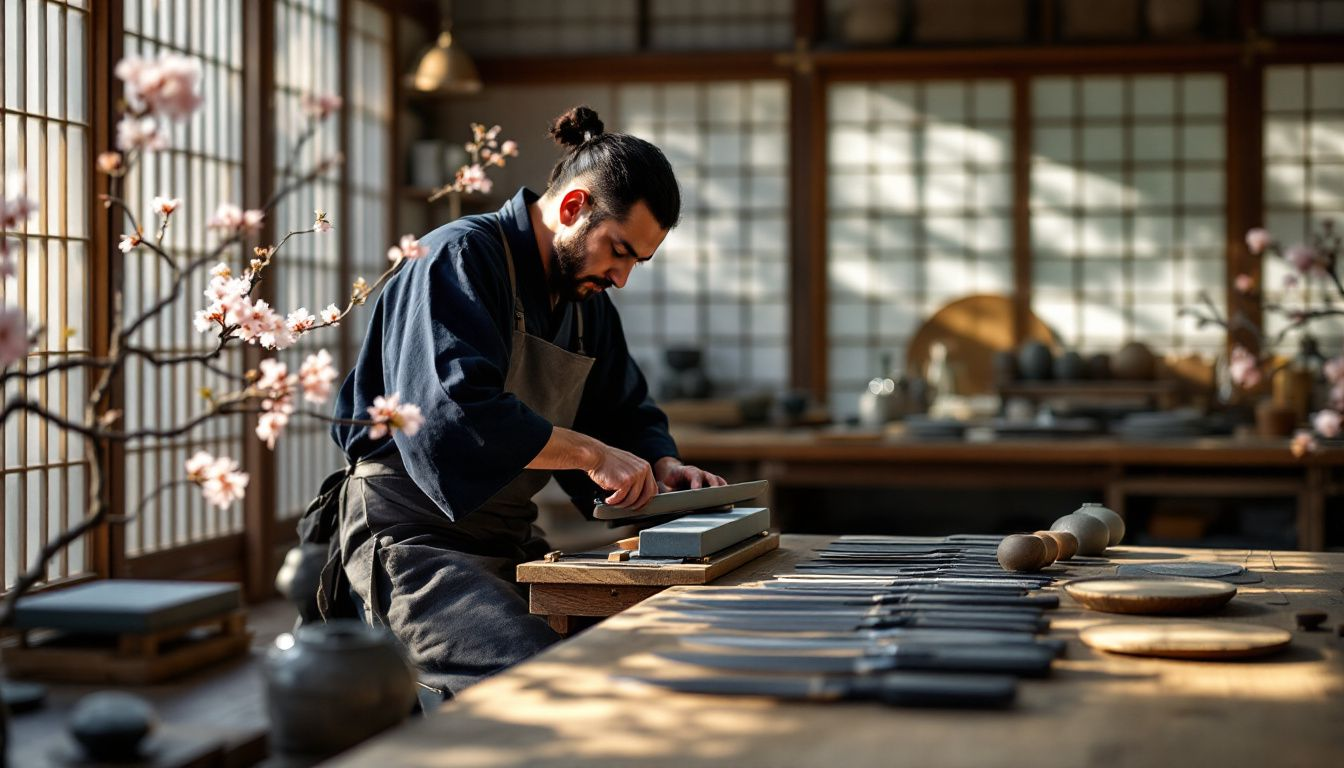
Japanese knife craftsmanship is a harmonious blend of tradition and innovation, rooted deeply in the techniques used to forge samurai swords. It’s a meticulous process that combines ancient methods with modern advancements, resulting in exceptional knives tailored for specific culinary tasks. The unique designs and superior quality of Japanese knives have made them a favorite among chefs worldwide, showcasing the elegance of the traditional Japanese knife style.
The journey of crafting a Japanese knife involves several critical stages, each contributing to the blade’s final performance. From the initial forging to the heat treatment and the final sharpening, every step is executed with precision and care. Here’s a guide to these processes, offering a glimpse into the artistry behind each knife.
Forging Techniques
The forging of Japanese knives is an art form that involves heating and hammering the metal to align the steel grain structure, enhancing its strength and durability. Skilled artisans, known as shokunin, fold and hammer the metal multiple times to eliminate impurities and create a sharp edge.
This meticulous process not only refines the blade’s composition but also ensures that the knife retains its edge and performs flawlessly.
Heat Treatment Process
The heat treatment process is crucial in achieving the perfect balance between hardness and flexibility in a Japanese knife. This involves heating the blade to a high temperature, rapidly quenching it to lock in hardness, and then a controlled reheat, or tempering, to reduce brittleness and enhance toughness.
Controlling the temperature accurately during this process ensures the blade achieves the desired properties.
Sharpening and Finishing
Sharpening and finishing are the final steps in crafting a Japanese knife, involving a series of whetstones with progressively finer grits to achieve a razor-sharp edge. This process is followed by final polishing, which not only gives the knife a mirror-like finish but also reduces friction during cutting, enhancing its performance.
The outcome is a sharp blade that serves as both a functional tool and a work of art.
Essential Types of Japanese Knives
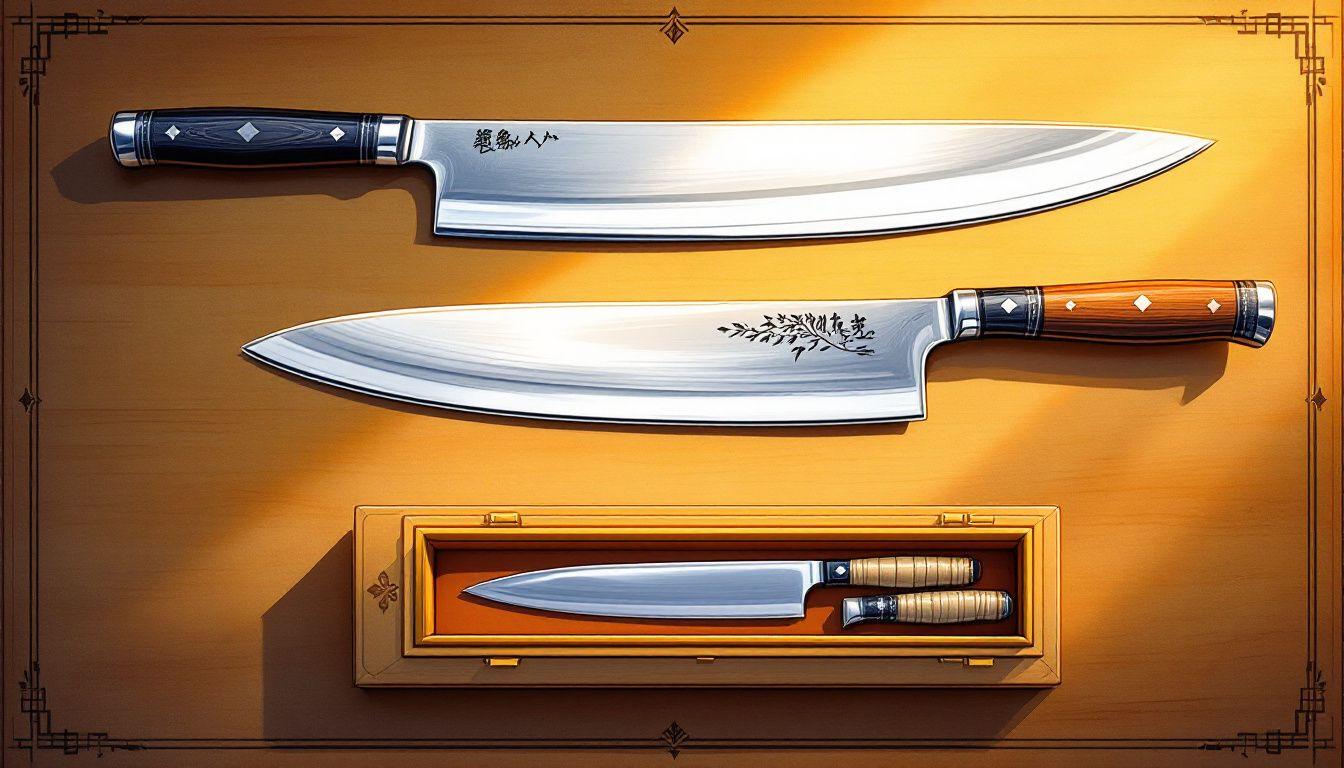
There are dozens of styles of Japanese knives, each designed for specific culinary tasks. These knives are not only functional tools but also crafted to engage all human senses, from the feel of the handle to the sound of the blade slicing through food. Choosing the right Japanese kitchen knife and understanding the various Japanese knife styles can significantly enhance your cooking experience by providing precision and efficiency.
Let’s explore some of the most essential types of Japanese knives, each with unique characteristics and uses. Knowing these differences will guide you in choosing the right knife, whether for slicing meat, dicing vegetables, or preparing sushi.
Gyuto (Chef’s Knife)
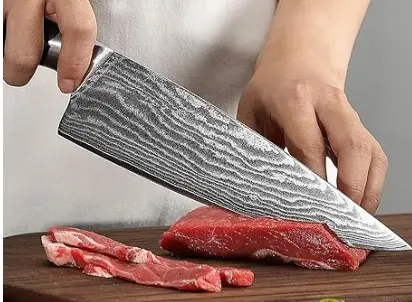
The Gyuto is the Japanese equivalent of a western chef’s knife and is incredibly versatile, suitable for cutting meat, fish, and vegetables. It features a lightweight and thin design that reduces wrist pressure and allows for better edge retention compared to western style knives.
Its versatility makes it a favorite among professional chefs for efficiently performing various tasks.
Santoku (Multi-Purpose Knife)
The Santoku knife, with its wide belly and curved spine, is highly versatile and suitable for a variety of tasks, including cutting fish, meat, and vegetables. Its taller blade profile allows for efficient rock-chop and push-cut techniques, making it a valuable addition to any kitchen.
Nakiri (Vegetable Knife)
The Nakiri knife is specifically designed for vegetable preparation, featuring a thin, flat-edged blade that resembles a meat cleaver. Its straight edge and broad flat profile make it ideal for precise vegetable cuts, such as julienne and brunoise techniques, and its wide square belly enables easy scooping up of diced vegetables.
Petty (Utility Knife)
The Petty knife, often overlooked, is an essential support knife for small jobs in the kitchen, such as slicing fruit, chopping herbs, peeling, and paring with a western paring knife. Compact and versatile, with lengths typically up to 18 cm, Petty knives are suitable for a wide range of culinary tasks.
Deba (Butcher’s Knife)
Deba knives are designed for processing meat and filleting fish but are not suitable for cutting through larger bones. They have a thick and heavy blade profile, with a pointed tip that allows for maneuverability, making them an excellent choice for butchering smaller fish and meat.
Yanagiba (Sushi Knife)
The Yanagiba knife, with its long and thin blade, is essential for making delicate slices of sushi and sashimi. Its primary use is for slicing raw fish, allowing for precise cuts necessary for these dishes, making it a must-have for sushi chefs.
Specialized Japanese Knives
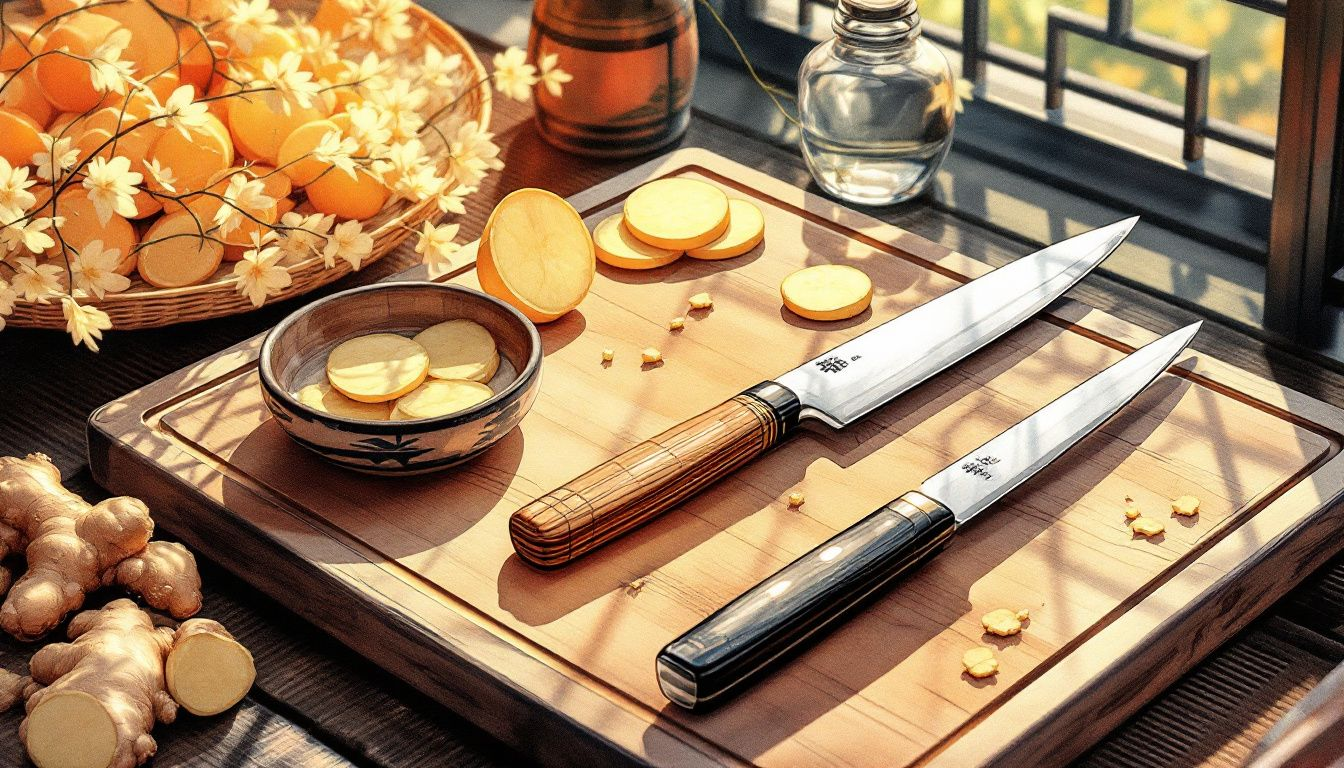
Specialized Japanese knives are predominantly used by professional chefs to enhance precision in culinary tasks. These knives are tailored for specific uses, particularly in seafood preparation, and are essential tools for advanced cooks.
Kiritsuke (Versatile Chef’s Knife)
The Kiritsuke knife is often regarded as a status symbol in kitchens, typically reserved for chefs of high rank. It embodies features of both the gyutou and yanagi knives, making it versatile for various culinary tasks.
Honesuki (Boning Knife)
The Honesuki knife, with its triangular blade shape, is primarily used for de-boning poultry and small animals. Its straight edge and pointed tip make it ideal for these tasks, though it is not suitable for carving large meat or cutting through bone.
Sujihiki (Carving Knife)
The Sujihiki knife is primarily used for slicing and trimming meat and fish, achieving long, smooth cuts. Its long and thin blade is ideal for making precise cuts through fish skin or separating fat from muscle in larger meat cuts.
Single Bevel vs. Double Bevel Blades
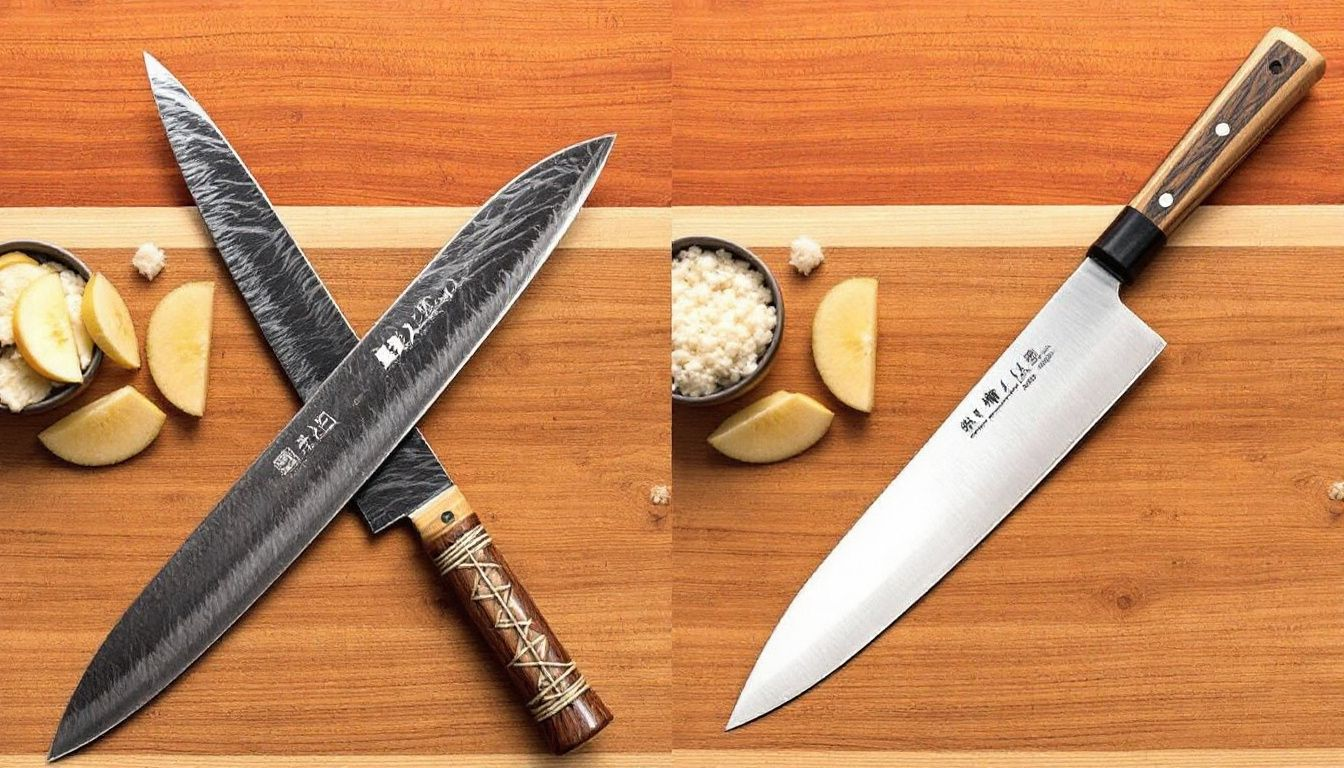
Understanding the difference between single bevel and double bevel blades is crucial when selecting the right Japanese kitchen knife. Single bevel knives are designed for precise cuts, making them essential for sushi and sashimi preparation.
Single Bevel Knives
Single bevel knives have a distinct asymmetry, providing unparalleled precision for delicate cutting tasks. This design allows for very thin, consistent cuts without damaging the food, making them ideal for tasks like sushi and sashimi preparation.
Double Bevel Knives
Double bevel knives, on the other hand, have symmetrical edges, making them versatile and easier to handle for a variety of kitchen tasks. Their V-shaped edge provides flexibility and is suited for general use, accommodating a wide range of cutting techniques.
No products found.
Caring for Your Japanese Knives
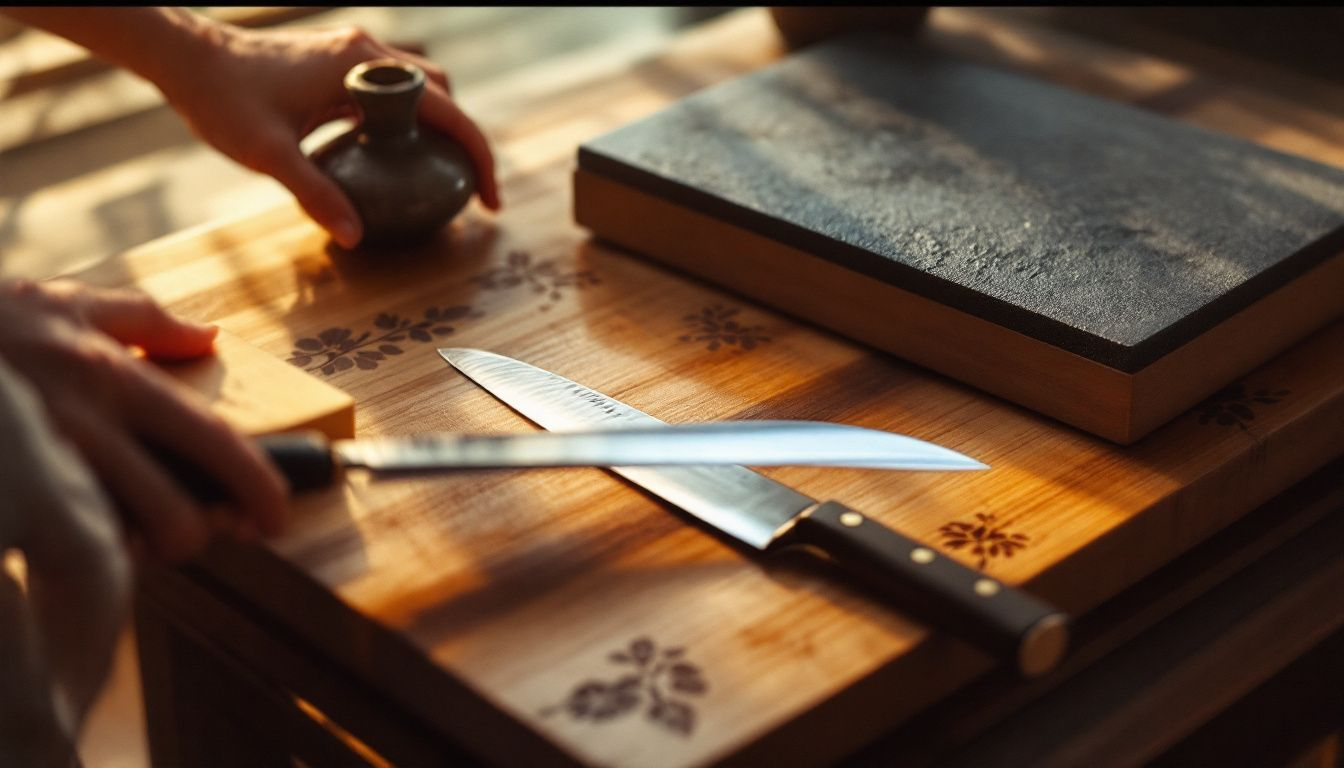
Regular maintenance can enhance both the longevity and performance of Japanese knives. Proper care includes careful cleaning, sharpening, and storage to extend their lifespan.
Proper Cleaning Techniques
Always hand wash Japanese knives with mild soap and dry them immediately after use to prevent rust. Avoid using abrasive cleaning materials that can scratch the surface of the knife.
Hand washing immediately and drying thoroughly after use prevent rust and corrosion.
Sharpening Tips
To maintain a sharp edge, it is advisable to sharpen Japanese knives at least once a month using a whetstone. Regular use of whetstones before the knives become noticeably dull ensures optimal performance.
Japanese sharpening stones are categorized by grit levels, affecting their effectiveness in sharpening tasks. Meticulous sharpening is necessary to maintain the unique cutting performance of Japanese knives.
Storage Solutions
Store Japanese knives in a manner that protects the edge, such as using a magnetic strip, wooden block, or blade guards. If you store knives in a drawer, use blade guards to prevent them from getting damaged or harming you.
For long-term storage, applying a thin layer of oil on the blade can help prevent rust and damage.
Summary
Japanese knives are more than just tools; they are a testament to the artistry and precision of Japanese craftsmanship. From the Gyuto to the Yanagiba, each knife serves a unique purpose and enhances the culinary experience. Understanding the different types of Japanese knives and how to care for them can transform your cooking, making it more efficient and enjoyable.
In conclusion, investing in the right Japanese kitchen knife and maintaining it properly will reward you with years of exceptional performance. Whether you’re a professional chef or a passionate home cook, these knives offer unparalleled precision and beauty, making every culinary task a pleasure.
Frequently Asked Questions
What makes Japanese knives different from Western knives?
Japanese knives stand out due to their exceptional craftsmanship and precision, which enhance their sharpness thanks to a blend of traditional forging techniques and modern technology. This results in tools that are highly specialized for specific culinary tasks.
How often should I sharpen my Japanese knife?
To maintain the sharp edge of your Japanese knife, it is advisable to sharpen it at least once a month using a whetstone. Regular maintenance ensures optimal performance and longevity.
Can I put my Japanese knife in the dishwasher?
You should not put your Japanese knife in the dishwasher; it’s important to wash it by hand with mild soap and dry it immediately to prevent rust and damage.
What is the best way to store Japanese knives?
The best way to store Japanese knives is on a magnetic strip, in a knife block, or with blade guards to protect their edges from damage. This ensures their longevity and maintains their performance.
What is the difference between single bevel and double bevel knives?
Single bevel knives offer precise cuts for specialized tasks like sushi preparation due to their asymmetrical design, whereas double bevel knives provide versatility for general use with their symmetrical edges.